

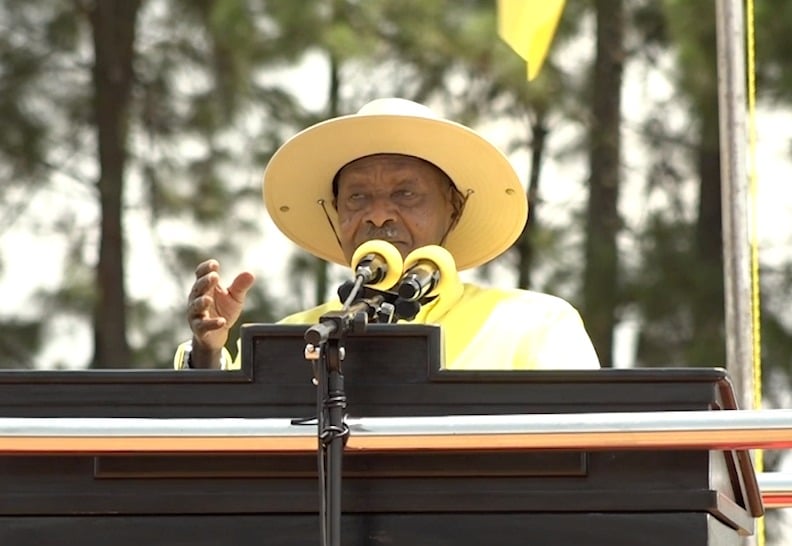
President Museveni will next week begin his much-anticipated presidential campaign visit to the Kigezi sub-region, where several longstanding issues are expected to dominate his addresses across the six districts that make up the area.
Museveni is scheduled to start his campaign tour on November 24, 2025, and as residents prepare for his visit, many are hoping for direct answers and actionable solutions to challenges that have affected their communities for years.
One of the most pressing matters is the issue of religion and sectarianism. The influence of religious groups on politics in Kigezi remains powerful, with voters increasingly concerned about how these divisions may shape the election period.
The president is expected to speak about the need for unity, tolerance, and stronger social cohesion as political temperatures rise.
Another sensitive topic is the continued imprisonment of Dr Kizza Besigye. As a son of the soil and a longtime opposition leader, Besigye’s incarceration remains a deeply emotional subject for many residents.
Museveni’s government has faced criticism over the matter, with claims that the detention is politically motivated.
Voters in Kigezi will be listening closely for any clarity the President may offer regarding Besigye’s fate.
Agriculture, the backbone of many households in the region, presents its own challenges. Wetland encroachment by farmers has become a major source of conflict, as the government pushes to protect fragile ecosystems while farmers insist on their need for arable land.
Museveni is expected to address how his government plans to balance environmental protection with the realities of subsistence farming.
The government’s ban on iron ore exports is another issue causing frustration in Kigezi. Although the policy was meant to encourage local processing, it has left artisanal miners struggling to survive.
The situation was worsened when the much-anticipated iron ore processing plant, initially promised for Rubanda, was relocated to Ntungamo.
Many miners now hope the president will present alternative livelihood plans or reconsider aspects of the policy.
Tea farming, a major economic activity in the region, has also faced serious setbacks. Many farmers have gone for months without payment for their produce, creating widespread financial strain.
The delayed payments have disrupted livelihoods, and residents expect Museveni to acknowledge the crisis and provide a clear strategy to stabilise the sector.
Infrastructure, particularly the state of tourism roads, remains a significant concern. Kigezi is one of Uganda’s key tourism hubs, but poor road conditions have slowed development and discouraged potential visitors.
Residents are eager to hear about specific plans for improving road networks, especially those that link major tourism sites.
There is also growing impatience over the long-promised Lake Bunyonyi ferry. Museveni committed to improving transport and infrastructure on the lake in previous campaigns, but the pledge remains unfulfilled. Locals now expect a definitive update on when the ferry will finally be delivered.
The role of General Kale Kayihura, the former Inspector General of Police, is likely to attract discussion.
Kayihura was recently appointed to a significant government position, raising questions among voters about his controversial legacy and what this appointment means for the future of the region and the country.
As preparations for Museveni’s arrival intensify, expectations are high across Kigezi. With unresolved political tensions, economic hardships, and infrastructure gaps, residents want concrete and implementable solutions.
How the president responds to these concerns will shape not only his reception in the sub-region but also the broader political landscape as the 2026 election season gains momentum.
